
Patrol Time! Instant Arrest!
KARAAGE GAMES LLC.Simulation
4.389.00 Reviews
- Version
- 1.1.1
- Installs
- 500.00K
- Age Rating
- Mature 17+
Screenshots


Our Review of Patrol Time! Instant Arrest!
 Analysis by Appyee
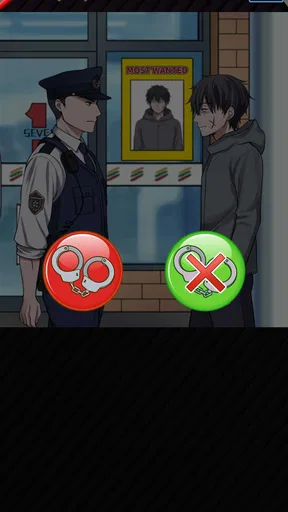
I approached Patrol Time! Instant Arrest! as a quick decision game rather than a traditional long-form simulation. Its central idea is simple: you patrol, examine clues, and decide who is responsible. That sounds easy, but the appeal comes from the small pause before acting. You are not just tapping through a scene; you are trying to separate useful evidence from distractions and commit to an arrest.
That makes it an interesting choice for players who enjoy short investigative moments, light role-playing, and games that ask for attention instead of reflexes. It is published by KARAAGE GAMES LLC. and sits in the simulation category, although its investigation-focused structure gives it a different feel from management or construction simulators. The game is free to start, carries a Mature 17+ rating, and is available for devices running iOS 10 or later.
How I Decide Whether This Kind of Game Is Worth Playing
For me, the first question is not whether the premise sounds clever. It is whether the basic loop stays satisfying after the novelty wears off. In this case, the important test is how much enjoyment you get from observing, comparing clues, and making a judgment. If you like the feeling of solving a small case under your own steam, the concept has a clear advantage over games that simply point you toward the next action.
The second question is session length. Patrol-style investigations are naturally suited to spare moments: a break, a commute, or a few minutes before bed. I would not choose it when I want a huge world to explore or a story that demands a long uninterrupted sitting. I would choose it when I want a focused mental exercise with a recognizable beginning, middle, and decision.
The third criterion is tolerance for uncertainty. A game built around clues is most enjoyable when I am willing to inspect details carefully and accept that I might make a wrong call. Players who prefer completely transparent objectives may find the arrest decision less comfortable. That tension is part of the attraction, but it can also become friction if you want every answer explained immediately.
There is also the question of age suitability. The Mature 17+ rating matters here, especially if you are choosing something for a younger player or sharing a device with family members. I would treat that rating as a practical filter rather than an afterthought. It places the game in a different lane from casual puzzle titles intended for everyone.
The store page presents it as a free game, while optional purchases range from $1.99 to $9.99 per item. That gives curious players a low-risk way to try the core idea, but I would still decide in advance whether I am comfortable with optional spending. A free entry point is useful; it should not be confused with a guarantee that every player will want to continue without purchases.
The Core Loop Rewards Careful Observation
What I like most about the premise is that it makes observation the main skill. In many mobile games, clues are merely decoration around a predetermined sequence. Here, the player’s attention is the meaningful resource. I found it more useful to slow down and build a mental picture of what happened than to rush toward the first suspicious character.
A practical way to play is to divide clues into three groups: facts that establish what happened, details that connect a person to the event, and information that merely creates doubt. That habit helps prevent a dramatic but weak clue from overpowering several quieter details. It also makes the arrest decision feel more deliberate, even during a short session.
Another useful approach is to avoid treating every clue as equally important. If a detail explains timing, location, or opportunity, I give it more weight than an isolated oddity. This is not a hidden button or a special mode; it is a player technique that makes the investigation loop more manageable. The game becomes less about guessing and more about organizing evidence.
I also recommend pausing before the final choice. The temptation in a quick mobile game is to tap as soon as one suspect feels suspicious. Waiting a moment to ask “what evidence actually links this person to the incident?” is often the difference between a reasoned decision and a hunch. That small discipline is one of the more satisfying parts of the experience.
Why It Works Better Than a Purely Casual Time-Filler
Patrol Time! Instant Arrest! has a stronger identity than a generic tap-and-progress game because the player’s role is clear. You are not simply collecting points or completing a repetitive route. You are acting as the person responsible for deciding whether the clues justify an arrest. Even when the individual scenario is compact, that responsibility gives each interaction a little more weight.
It also offers a different kind of relaxation. I would not call it mindless, but it can still be calming because the focus is narrow. Instead of juggling a large inventory, several upgrade trees, and a map full of objectives, I can concentrate on the immediate case. That makes it a good fit for someone who wants a game that occupies the mind without demanding a major long-term commitment.
The game’s public reception supports the idea that the concept has found an audience. It holds an average rating of 4.3 from around 8.9 thousand ratings, with over 500 thousand installs. I read those figures as evidence of solid interest rather than proof that every player will enjoy it. Investigation games are naturally divisive: some people love interpreting clues, while others dislike being asked to make judgments with incomplete information.
The current version is 1.1.1, which is useful to know when checking whether your device is ready for the experience. Its release date is March 8, 2026, so the game is a relatively recent addition to the mobile simulation space. I would keep expectations realistic around a newer title: the central idea may be the main reason to play, rather than a vast collection of mature systems built over many years.
Everyday Situations Where I Would Actually Play It
Imagine that I have ten minutes before leaving for an appointment. A large story game is inconvenient because I may need to remember several plot threads, while a competitive match could end just as I have to put the phone away. This is where the patrol format makes sense. I can open the game, focus on a case, make a decision, and stop without feeling that I abandoned a complicated campaign.
It also works for a player who enjoys discussing choices with friends. After reaching a decision, I can explain which clue influenced me and compare that reasoning with someone else’s instinct. That social angle is more interesting than simply comparing scores because it exposes different ways of reading the same situation. One person may focus on opportunity, while another notices an inconsistency in the story.
On the other hand, I would not recommend it as a background game for watching television. The clues require attention, and half-listening can make the experience feel unfair when the real problem is that I missed something. It is also not my first choice for a player who wants character-building, open exploration, or a detailed police-management simulation. The appeal is the decision itself, not a broad professional career system.
Where This Game Wins, Where Alternatives Fit, and What Switching Really Costs
I find this game’s clearest advantage in its compact, clue-led decisions, while alternatives make more sense when I want a longer story, cleaner logic puzzles, or broader management systems. Switching is easy to try, but the real trade-off is whether judging evidence feels rewarding enough to become a habit rather than a one-time novelty. That question leads naturally to how its value holds up over time.
The Strongest Reason to Choose It
The clearest strength is focus. Patrol Time! Instant Arrest! takes the fantasy of police investigation and reduces it to a direct question: who is responsible, and do the clues support that conclusion? That narrow design is valuable on a phone because it avoids the setup burden found in larger simulation games. I can understand the objective quickly and spend my time on the part that matters.
It also wins for players who prefer interpretation over optimization. In a management simulator, I might spend most of my time balancing budgets, upgrading equipment, or arranging schedules. In a conventional puzzle game, the answer may be a fixed pattern that I eventually recognize. Here, the satisfaction comes from weighing evidence and accepting responsibility for the choice. That is a distinct type of engagement.
The game is especially appealing if you like replaying a situation mentally after the decision. When I make an arrest, I naturally review the clues that led me there. That self-checking process gives the short format more depth than its simple premise suggests. The experience is not only about reaching the outcome; it is about whether my reasoning felt sound.
Its free price also lowers the barrier to testing the concept. I can find out fairly quickly whether clue-based patrol gameplay suits me without committing to a paid purchase at the beginning. The important trade-off is that optional items are available, so I would approach the free entry point with a clear personal spending limit rather than assuming the whole experience is entirely free of monetization pressure.
Where a Different Category May Be Better
If you want a detailed simulation of law enforcement as an organization, this is probably too focused. A management-oriented alternative would be better for players who enjoy staffing, planning, resources, and long-term operational choices. Those games offer broader systems, while this one puts the spotlight on identifying a culprit from clues.
If your priority is a long narrative with developed characters, a story-driven detective game may suit you more. Such games usually give greater space to dialogue, relationships, atmosphere, and plot progression. Patrol Time! Instant Arrest! is a better match when you want the compact reasoning challenge itself, not necessarily an expansive detective drama.
Puzzle fans should also think about what kind of puzzle they prefer. A logic-grid game offers clean rules and a solution that can often be proven step by step. This patrol experience is more situational and judgment-based. If you dislike ambiguity, a traditional logic puzzle may feel fairer and more predictable. If you enjoy deciding which details deserve trust, this game has the more personal appeal.
Action players may find the pace too restrained. There is no reason to choose a clue-focused simulation when what you really want is movement, combat, or rapid reactions. The game’s strength is the pause before the arrest. That is precisely why it may feel slow to someone expecting constant activity.
Practical Friction and the Cost of Changing Games
Switching to this game is easy if you are coming from lightweight mobile puzzles: the premise is understandable, the price is accessible, and the sessions can fit around daily life. The bigger adjustment is mental. You have to stop looking for the fastest tap and start treating the scene as evidence. Players who usually play idle or automatic games may need a little patience before the loop feels rewarding.
Switching away is just as straightforward if the format does not click. A management simulator will give you more ongoing control, a narrative detective game will give you more story, and a conventional puzzle title will give you cleaner rules. The cost is mainly losing the specific pleasure of making a suspect decision from imperfect information. That is not a problem if that kind of judgment is not what you came for.
Optional purchases are another part of the decision. Because individual items fall between $1.99 and $9.99, I would not spend automatically after the first enjoyable session. I would first ask whether the additional content or convenience changes the experience in a meaningful way for me. Players who prefer a strictly fixed-price game may be more comfortable choosing a premium alternative with no in-app purchase structure.
Device compatibility is relatively broad because the game supports iOS 10 and later. Even so, I would check the operating system before recommending it to someone using an older iPhone or iPad. Compatibility is not the same as identical performance, and a player with an aging device may reasonably prefer a simpler title if loading or responsiveness becomes distracting.
Who Should Skip It
I would skip this game if I want a predictable activity that I can play while distracted. Clues lose their value when I am not paying attention, and the arrest decision is less enjoyable when it becomes a guess caused by multitasking. I would also skip it if the Mature 17+ rating does not fit my household or personal preferences.
I would be cautious if I dislike making irreversible-feeling judgments. Even when the game is designed for entertainment, the role-playing premise can make a wrong arrest feel more uncomfortable than a missed puzzle answer. That emotional response is not a flaw for everyone, but it is a legitimate reason to choose a lighter, less consequential theme.
Finally, I would not choose it as my main game if I need a deep progression system. The appeal is concentrated in the patrol-and-decision loop. Players who measure value by extensive customization, a large world, or a long campaign should look toward a different category rather than expecting this focused game to become something broader.
My Recommendation After Weighing the Trade-Offs
I recommend Patrol Time! Instant Arrest! to players who enjoy clue-based decisions, short investigative sessions, and the feeling of forming a conclusion from incomplete information. It is a particularly good fit for someone who wants something more thoughtful than a reflex game but less demanding than a large story or management simulation.
My advice is to play slowly at first. Read the situation as a whole, separate strong evidence from suspicious-looking noise, and wait before making the arrest. That approach reveals the game’s best quality: it turns a small mobile interaction into a test of judgment. Rushing removes much of the reason to play.
I would recommend trying it free before considering any optional purchase. If the central act of weighing clues already feels satisfying, the game has probably earned a place in your rotation. If the cases feel vague, the decisions feel arbitrary, or you find yourself wanting a larger simulation around them, switching to a narrative detective game, a logic puzzle, or a management title will likely be the better choice.
Overall, Patrol Time! Instant Arrest! is not trying to replace every kind of simulation game. Its value comes from doing one thing with a clear identity: putting me in the position of deciding whether the evidence is enough. With an average rating of 4.3 and over 500 thousand installs, it has already attracted a substantial mobile audience. I think that interest is understandable, but the right recommendation depends on your taste for ambiguity, attention, and compact investigations.
Verdict
Strengths of Patrol Time! Instant Arrest!
- Quick tap-based gameplay makes it easy to learn.
- Short sessions are ideal for playing on the go.
- Bright visuals give the game a cheerful arcade feel.
- Simple controls work well on phones and tablets.
- Progression encourages repeated attempts and higher scores.
Limitations of Patrol Time! Instant Arrest!
- Gameplay can become repetitive after extended sessions.
- Limited strategic depth may not satisfy experienced players.
- Some levels may feel too easy for longtime gamers.
- Frequent retries can make mistakes feel frustrating.
- Performance may vary on older devices.
Other Releases by KARAAGE GAMES LLC.
View All
Everyday Chills:Hidden Horrors
Trivia3.6

Toxic Love: Dark Boyfriends
Simulation4.2
Similar Picks in This Category
View All
Truckers of Europe 3
Wanda Software4.3

Town Building Life Simulator
XGame Global4.2

Fidget Toys Trading・Pop It 3D
Freeplay Inc4.7

Sculpt People
CrazyLabs LTD4.4

Scary Teacher 3D
Z & K Games4.2

Hair Tattoo: Barber Shop Game
CASUAL AZUR GAMES4.3
Frequently Asked Questions
What is Patrol Time! Instant Arrest!?
Patrol Time! Instant Arrest! is a casual police-themed mobile game in which you take on the role of an officer responding to incidents, chasing suspects, and making arrests. Its gameplay is built around short missions, simple controls, and quick decisions rather than a complex simulation. It is designed for players who enjoy light action, progression, and easy-to-learn challenges.
How do you play Patrol Time! Instant Arrest!?
The game generally focuses on completing patrol-related tasks, identifying suspicious characters, pursuing offenders, and stopping them before they escape. Controls are designed for touchscreens, so most actions can be performed with taps, swipes, or straightforward movement. As you advance, missions may become more demanding, requiring faster reactions and better timing to complete objectives successfully.
Is Patrol Time! Instant Arrest! free to download and play?
Patrol Time! Instant Arrest! can typically be downloaded without an upfront purchase, allowing players to try its main gameplay at no initial cost. However, free mobile games may include advertisements, optional in-app purchases, or other monetized features. Before downloading, it is worth checking the store listing for current pricing details, available purchases, and whether certain upgrades or bonuses require payment.
Does Patrol Time! Instant Arrest! require an internet connection?
The need for an internet connection can depend on the version of the game and the feature you are using. Basic missions may work offline after the necessary files have been installed, while advertisements, updates, cloud saving, or other online services may require connectivity. If you plan to play while traveling, test the game in airplane mode first, since offline availability can change with updates.
Is Patrol Time! Instant Arrest! suitable for children?
Patrol Time! Instant Arrest! may be suitable for players who enjoy cartoon-style police action, but parents should still review its age rating and store description before allowing children to download it. The game can include arrest scenarios, pursuit sequences, advertisements, and optional purchases. Checking privacy permissions, advertising settings, and in-app purchase controls is recommended, especially when the app is installed on a child’s device.
Play our best games!


